


Here is the trap a lot of cat owners fall into: they shop for cat food the way they would shop for dog food, or worse, they feed a cat from the same logic. A cat is an obligate carnivore. It evolved to get its nutrition from animal tissue, and unlike a dog it cannot make enough of certain nutrients on its own. Cats need a dietary source of taurine, more arginine, and arachidonic acid, all of which come from meat, not plants (Merck Veterinary Manual). A diet that would keep a dog healthy can leave a cat short.
Taurine is the one to understand first. Cats cannot synthesize enough of it, so it has to be in the bowl, and a chronic shortage can cause dilated cardiomyopathy (a serious heart condition) and central retinal degeneration that damages vision (Merck Veterinary Manual). That is why a complete cat food guarantees taurine on the label: AAFCO sets a minimum of 0.10% on a dry matter basis for dry (extruded) food and 0.20% for canned (wet) food, for both growth and adult maintenance (AAFCO). The protein floor is higher than a dog's too: at least 30% as dry matter for kitten growth and 26% for adult maintenance (AAFCO, Merck Veterinary Manual).
Two screens, in order. First, the food must carry an AAFCO nutritional adequacy statement for the right life stage, complete and balanced, confirmed by formulation to the AAFCO Cat Food Nutrient Profiles or by an animal feeding trial (AAFCO). Second, it should pass the WSAVA questions: does the maker employ a qualified nutritionist, run real quality control, and share nutrient and calorie data on request? WSAVA does not rank brands; it gives owners those questions to ask (WSAVA). Every pick below clears both screens and guarantees taurine on the label. Nothing lands on this list until it clears both, which is how we keep the shortlist honest. Think of it as a starting shortlist; the cat in front of your vet, especially one with a urinary or kidney issue, still gets the deciding vote.
The six we recommend
6 foods, 6 jobs. Each card carries three real numbers taken from the current label or manufacturer page, the kind you can verify on the can or bag yourself. Protein, fat, and taurine figures are guaranteed-analysis minimums (as fed unless noted), and a dry food's percentages always read higher than a wet food's because dry holds about 10% water and wet around 78%. The dollar figures are mid-2026 US retail estimates that shift over time, so treat them as a guide and verify before you buy. Dry foods are priced per pound; the wet pick is priced per 3 oz can.
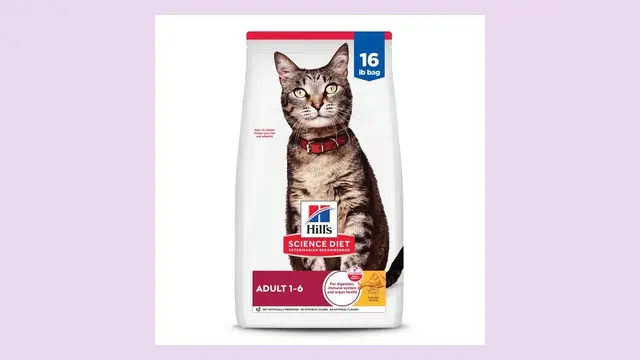
Hill's Science Diet Adult Chicken Recipe (dry)
About $2.80 to $3.40/lb
A plain bag that gets the fundamentals right for a healthy adult cat. Chicken leads the recipe, the adult-maintenance claim is backed by an AAFCO animal feeding trial rather than formulation alone, and Hill's publishes full nutrient and calorie data, which clears the WSAVA questions. At 30% minimum protein it sits right at the AAFCO adult floor. It is built for cats roughly 1 to 6 years old, so reach for the kitten or 7+ pick at the ends of that range.
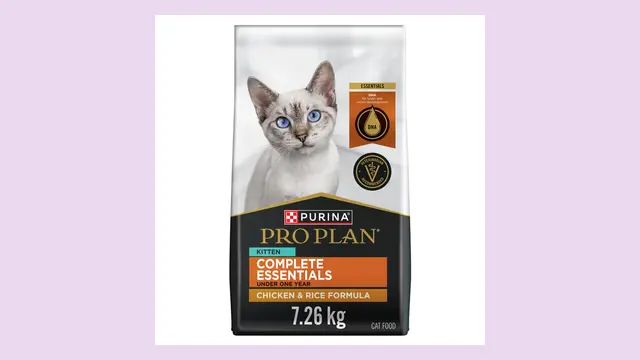
Purina Pro Plan Complete Essentials Kitten Chicken & Rice (dry)
About $2.40 to $3.00/lb
At around 40% minimum protein this is the highest-protein food on this list, which fits the tissue a kitten is building fast. It is formulated to meet the AAFCO profiles for growth and for gestation and lactation, so it also suits a pregnant or nursing queen, and it adds DHA for brain and vision development. The claim here is by formulation, not a feeding trial, which is common for kitten formulas. Kittens grow quickly, so confirm portion size with your vet rather than free-feeding to a guess.
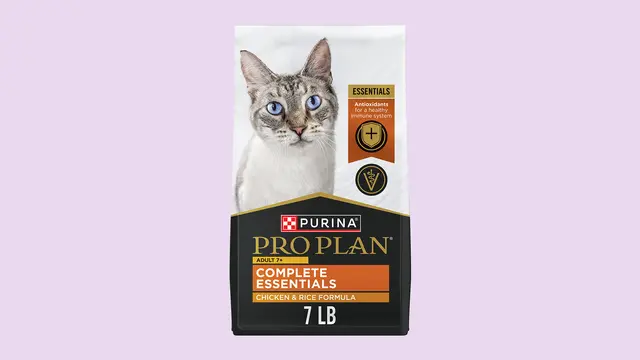
Purina Pro Plan 7+ Complete Essentials Chicken & Rice (dry)
About $2.60 to $3.20/lb
Built for cats 7 and older, with 38% minimum protein and guaranteed taurine at 0.15%, above the AAFCO dry-food floor. Real chicken leads, and Purina says a nine-year feeding study in cats supports the formula, with the adult-maintenance claim backed by an AAFCO feeding trial. Higher protein helps an older cat hold lean muscle. Age alone is not a diagnosis, so if your senior has kidney disease or another condition, ask your vet whether a therapeutic diet is the better fit before switching on the number on the bag.
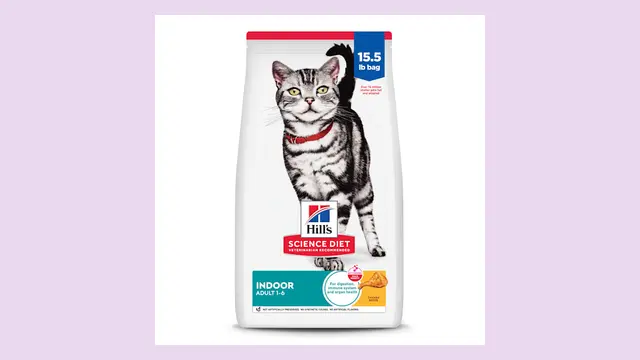
Hill's Science Diet Adult Indoor Chicken Recipe (dry)
About $2.90 to $3.40/lb
Aimed at the lower-activity life of a cat that never goes out, with protein near 36% and fat near 15% on a dry matter basis to help hold a healthy weight, plus fiber that supports hairball control. The adult-maintenance claim is backed by an AAFCO feeding trial. An indoor cat still gets fat if you overfeed it, so this recipe manages, not erases, the calorie math. Weigh portions and watch body condition rather than topping the bowl on a schedule.
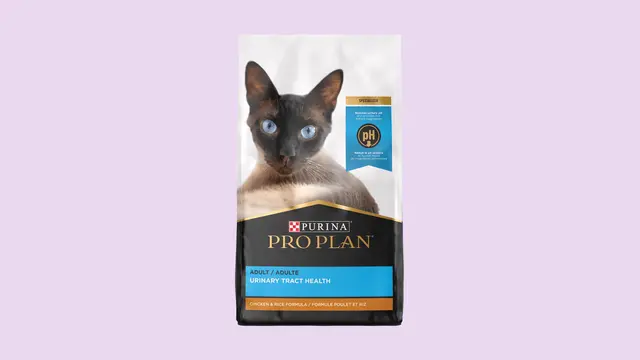
Purina Pro Plan Urinary Tract Health Chicken & Rice (dry)
About $2.50 to $3.10/lb
Formulated to reduce urinary pH and hold dietary magnesium low (guaranteed at a maximum of 0.075%), at 31% minimum protein with chicken first and an AAFCO feeding-trial-backed adult-maintenance claim. This is over-the-counter support, not a prescription stone-dissolving diet, and it is meant to be fed on its own rather than mixed. If your cat has had a urinary blockage or diagnosed crystals, this is a vet conversation first, since the right diet depends on the crystal type.
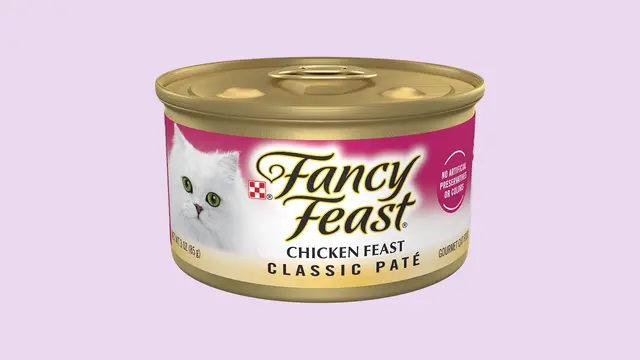
Purina Fancy Feast Classic Pate Chicken (wet)
About $0.90 to $1.20 per 3 oz can
An inexpensive complete-and-balanced canned food that does the one thing dry cannot: it brings water to the bowl, at about 78% moisture. It is formulated to the AAFCO profiles for all life stages, guarantees taurine, and a smooth pate suits cats that dislike chunks. The as-fed protein reads low at around 10% only because of the water; on a dry matter basis it is high. The trade-offs are real: it spoils once opened and costs more per calorie than kibble, so many owners feed it alongside a dry food.
The six side by side
Here are the same six picks in a single grid, rows in the order of the cards, so protein and price read across in one glance. One caution on reading them: you cannot compare a dry food's protein directly against the wet pick's. The Fancy Feast figure looks low at about 10% only because roughly 78% of the can is water; remove the water and it is a high-protein food. The five dry foods are comparable to each other, and they run from 30% up to the kitten pick's roughly 40% minimum.
| Food | Best for | Protein (min, as fed) | Form | Approx price |
|---|---|---|---|---|
| Hill's Science Diet Adult Chicken Recipe | Overall adult | 30% | Dry | $2.80–$3.40/lb |
| Pro Plan Complete Essentials Kitten Chicken & Rice | Kittens | ~40% | Dry | $2.40–$3.00/lb |
| Pro Plan 7+ Complete Essentials Chicken & Rice | Seniors | 38% | Dry | $2.60–$3.20/lb |
| Hill's Science Diet Adult Indoor Chicken Recipe | Indoor cats | ~36% (DM) | Dry | $2.90–$3.40/lb |
| Pro Plan Urinary Tract Health Chicken & Rice | Urinary support | 31% | Dry | $2.50–$3.10/lb |
| Fancy Feast Classic Pate Chicken | Best wet | ~10% | Wet | $0.90–$1.20/can |
Wet, dry, or both
This is the question cat owners ask more than any other, and the honest answer turns on water. Cats descend from desert animals and carry a low thirst drive, so they tend not to drink enough to make up for a dry diet. Canned food runs around 78% moisture against roughly 10% for kibble, which means a wet meal passively adds water and produces more dilute urine. The AVMA flags adequate hydration as part of managing feline lower urinary tract disease (AVMA), and dilute urine is generally less hospitable to crystal and plug formation.
That does not make dry food a mistake. Kibble costs less per calorie, portions cleanly, does not spoil in the bowl, and a complete dry food carries the same AAFCO backing as a complete wet one (AAFCO). For a healthy cat with no urinary history, a quality dry food plus a clean, always-available water source is fine. Many owners split the difference: dry for the daytime grazing a cat likes, a can or two of wet for the moisture. If your cat has had urinary trouble or early kidney disease, lean toward more wet food and let your veterinarian set the plan.
Choosing for your cat
Best overall: Hill's Science Diet Adult Chicken Recipe, a feeding-trial-backed adult maintenance food at 30% protein with chicken first. Best for kittens: Pro Plan Complete Essentials Kitten Chicken & Rice, the highest-protein pick here at about 40% and formulated for growth and reproduction. Best for seniors: Pro Plan 7+ Complete Essentials Chicken & Rice, 38% protein with taurine guaranteed at 0.15% for cats age 7 and up. Best for indoor cats: Hill's Science Diet Adult Indoor Chicken Recipe, higher protein with calorie and hairball management for a lower-activity life. Best for urinary support: Pro Plan Urinary Tract Health Chicken & Rice, low dietary magnesium (0.075% max) and reduced urinary pH, with a vet's sign-off if your cat has a diagnosed issue. Best wet: Fancy Feast Classic Pate Chicken, a complete all-life-stages canned food at about 78% moisture for the water a cat needs. Match the life stage and any health condition to your cat first, then confirm with your veterinarian.
What cat owners ask about food
Because a cat is an obligate carnivore and a dog is not, and the gap shows up in nutrients a cat cannot make on its own. Cats need a dietary source of taurine, more arginine, and arachidonic acid, all from animal tissue, and most dog foods are not formulated to supply them at feline levels (Merck Veterinary Manual). Taurine is the big one: a chronic shortage can cause heart disease (dilated cardiomyopathy) and vision loss (central retinal degeneration) in cats (Merck Veterinary Manual). An occasional stolen bite of dog food will not poison a cat, but dog food as a diet will leave it deficient. Feed a food that carries an AAFCO cat statement for your cat's life stage (AAFCO).
Find the AAFCO nutritional adequacy statement, usually in small print on the back or side. It pins down which stage the food covers, whether that is growth, adult maintenance, or all life stages, and tells you whether the maker proved it by formulation to the AAFCO Cat Food Nutrient Profiles or by an animal feeding trial (AAFCO). Then read the guaranteed analysis for minimum crude protein and for guaranteed taurine, which a complete cat food lists. The first ingredient tells you the largest component by weight, but the ingredient list alone is a weak quality signal, which is why WSAVA points owners to the nutritional statement and the maker's expertise instead (WSAVA).
AAFCO sets a minimum of 0.10% taurine on a dry matter basis for dry (extruded) cat food and 0.20% for canned (wet) food, for both kitten growth and adult maintenance (AAFCO). The two numbers differ because of how the nutrient behaves in processing, not because wet food is better. Any food labeled complete and balanced for cats has to meet the minimum, so you do not need to add a taurine supplement to a complete diet. If you home-cook or feed a homemade diet, taurine is one of the nutrients most likely to fall short, so work with your veterinarian or a board-certified nutritionist.
It helps with hydration, which matters for urinary health, but it is not a cure. Canned food runs around 78% moisture against roughly 10% for kibble, so it passively adds water and produces more dilute urine, which is generally less hospitable to crystals and plugs. The AVMA lists adequate hydration as part of managing feline lower urinary tract disease (AVMA). For a healthy cat, a complete dry food plus a reliable water source is fine; for a cat with a urinary history, more wet food often helps. Either way, if your cat has had a blockage or diagnosed crystals, the diet is a veterinary decision because it depends on the crystal type.
Most cats move from a growth (kitten) formula to an adult maintenance food at around 12 months, when they reach roughly their adult size, though some large breeds keep growing a little longer. Kitten food is more calorie- and nutrient-dense to fuel rapid growth, so staying on it past maturity can lead to weight gain. Make the change as a gradual transition over about a week, mixing increasing amounts of the new food, since cats can be both finicky and prone to a stomach upset from a sudden swap. If your cat refuses the new food or your timing is uncertain, confirm with your veterinarian.