


Picture the scene. You walk in, drop your bag, and your cat is already digging both front paws into the side of the sofa and dragging down with that slow, satisfied lean. You did not train that. Nobody did. Scratching is one of those things a cat arrives pre-loaded with, and the only real decision you get to make is what they sink their claws into. A wall of upholstery, or something you actually bought for the job.
It helps to know that scratching is not your cat being a jerk. The ASPCA lists why they do it: cats "scratch while stretching," they scratch "to mark territory," and they scratch "to remove frayed, worn outer claws and expose new, sharper claws" (ASPCA). It is grooming, exercise, and a sticky note to other cats all at once. Which is also why the surgical shortcut is off the table here. The AVMA strongly discourages elective declawing and calls it "an acutely painful procedure" that "may result in chronic pain, maladaptive behavior, disability" (AVMA), and the ASPCA is "strongly opposed to declawing cats" and says it "should never be used as a behavioral remedy" (ASPCA). So the answer is not to remove the claws. The answer is to give them somewhere better to land.
Here at PawProof we sorted by the two things cats actually care about: orientation and grip. The ASPCA notes that "some cats prefer horizontal posts. Others might like vertical posts or slanted posts" (ASPCA), so this list covers all three shapes instead of pretending one wins for every cat. Every vertical pick is "tall enough that they can stretch fully" and sits on a base that "won't shift or collapse when used" (ASPCA), because a wobbly post sends a cat straight back to the couch. We leaned on sisal, the rope-like fiber most cats dig into hardest, and included a cardboard option for the cats who vote that way. The dollar amounts below are mid-2026 guesses, so double-check the price and dimensions on the label before you commit.
The six picks
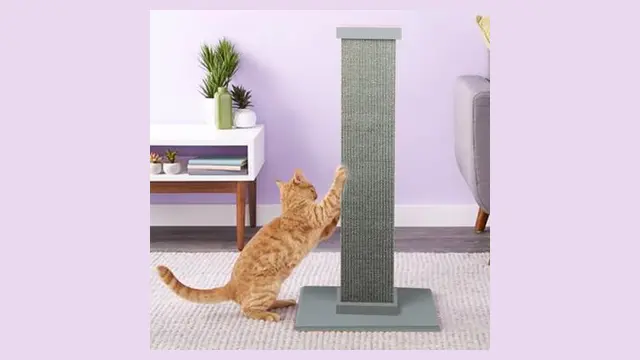
SmartCat Ultimate Scratching Post
About $50 to $65
A tall, no-nonsense sisal column on a wide 16-by-16-inch base, which is exactly the recipe the ASPCA describes: tall enough for a full stretch, heavy enough that it does not tip. At roughly 32 inches it lets a grown cat reach up and pull down hard, and the woven sisal takes years of abuse. The catch is honesty in design, not flaws: it is just a post. No perch, no cave, no toys, so a cat who wants somewhere to nap is not served here.
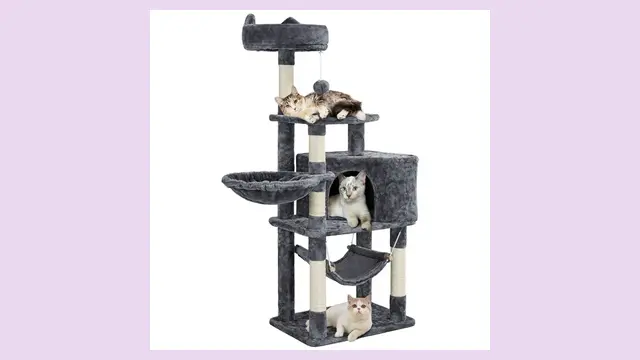
Yaheetech 54.5" Multilevel Cat Tree
About $40 to $60
More than four feet of climbing for the price of a nice dinner, with two covered condos, perches, and sisal-wrapped posts so the scratching and the lounging live in the same tower. Yaheetech rates the whole structure to around 66 pounds and includes an anti-tip strap, which you should actually use. The honest downside is the finish: the plush wears and the particleboard is not heirloom furniture, so treat it as a few-year piece, not a lifetime one.
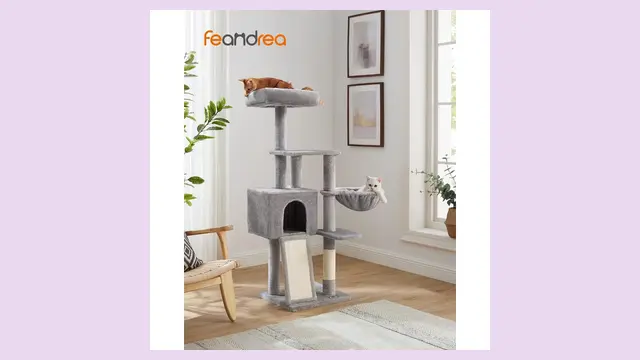
FEANDREA Large Cat Tower
About $70 to $110
When you have a Maine Coon energy level or more than one cat playing king-of-the-hill, you want a wide footprint and real height. The taller FEANDREA towers run past six feet with reinforced bases, multiple caves and perches, and ship with an anti-tip wall kit FEANDREA includes on its trees. Capacity tops out around 44 pounds across the structure. The downside is space and effort: it is a big box, assembly takes a while, and a small apartment will feel it.
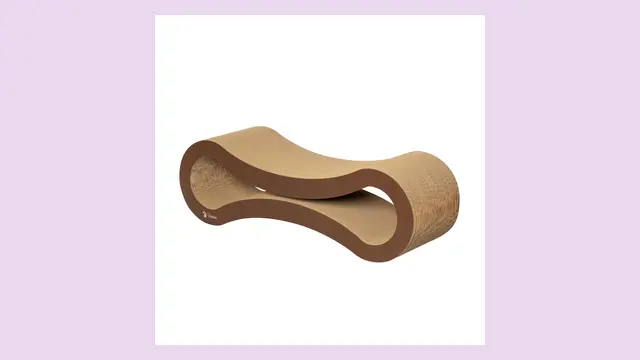
PetFusion Ultimate Cat Scratch Lounge
About $35 to $50
Some cats scratch down and out, not up, and this is the pick for them. It is a curved slab of recycled corrugated cardboard, roughly 34 inches long, that doubles as a place to flop after a good claw session. It is reversible, so you flip it when one side shreds, and it comes with catnip to seal the deal. The downside is the nature of cardboard: it sheds little brown flakes around the floor and it is a consumable, so plan to replace it over time.
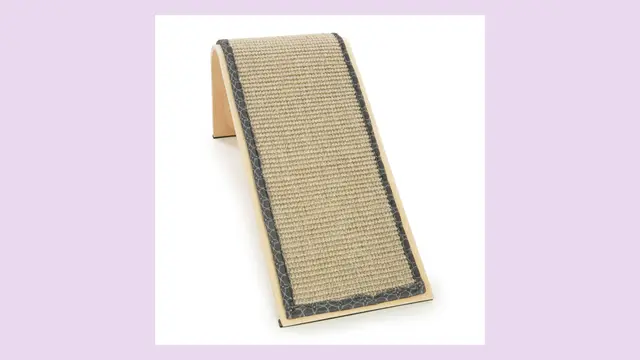
SmartyKat Sisal Angle Ramp
About $20 to $30
An angled sisal pad on a wooden frame, which is the slanted middle ground the ASPCA mentions for cats who do not commit to fully vertical or flat. It is cheap, it is stable because it sits low and wide, and the sisal surface is more durable than the cardboard alternatives at this price. The honest limit is ambition: it is small and short, so it works as a second or third option around the house rather than the one big anchor for a serious scratcher.
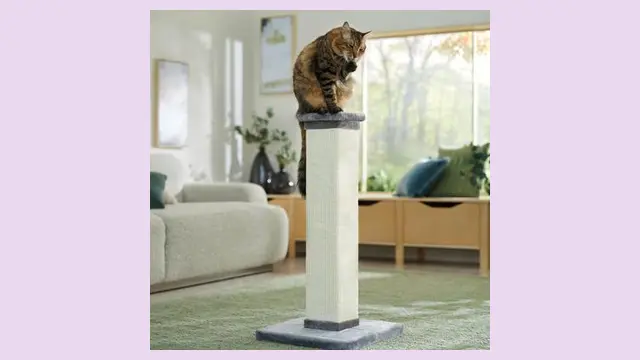
Frisco 33.5" Heavy Duty Sisal Post
About $35 to $45
A vertical post with a small top perch and, importantly, a double-layer baseboard on a 16-by-16-inch footprint, so it stays planted when a cat throws its weight into a scratch. At 33.5 inches it gives a real stretch without eating floor space, which is the point in a one-bedroom. The downside is the perch: it is a modest 7-by-7-inch platform, fine for a quick sit but not a place a larger cat will sprawl out and sleep.
All six at a glance
| Product | Type | Material | Key spec | Est. price |
|---|---|---|---|---|
| SmartCat Ultimate Post | Vertical post | Woven sisal | 32 in tall, 16x16 base | $50–$65 |
| Yaheetech 54.5" Tree | Tall tree | Sisal + plush | 54.5 in, ~66 lb rated | $40–$60 |
| FEANDREA Large Tower | Big tree | Sisal + plush | Up to ~75 in, ~44 lb | $70–$110 |
| PetFusion Scratch Lounge | Horizontal | Cardboard | ~34 in, reversible | $35–$50 |
| SmartyKat Angle Ramp | Slanted pad | Sisal | Low, wide, angled | $20–$30 |
| Frisco 33.5" Sisal Post | Vertical post | Sisal + plush | 33.5 in, 16x16 base | $35–$45 |
How to set it up so they actually use it
Buying the right thing is half the job. The other half is placement, and this is where most people quietly lose. A scratcher exiled to the back bedroom gets ignored. Put it where the scratching already happens. If your cat is shredding the couch, stand a post right next to that corner of the couch, because they are scratching there for a reason and you are offering a trade, not a relocation. The ASPCA backs the gentle nudge: "employing behavior modification techniques to induce the cat to use them" (ASPCA), which in plain terms means a sprinkle of catnip, a dangled toy near the surface, and praise when they take the bait.
Two safety notes that matter more than the brand. First, anchor anything tall. For trees over four feet, or any home with kids or a cat who launches off the top, the wall strap is not optional, and both the Yaheetech and FEANDREA include one for a reason. Second, keep the claws maintained alongside the gear, not instead of it. Regular nail trims to "blunt the tips" are the ASPCA's first listed alternative to declawing (ASPCA), and the AVMA also points owners toward scratching surfaces, trims, and soft nail caps as the humane route (AVMA). Tip: offer two shapes, one vertical and one horizontal, before you assume your cat dislikes scratchers. Plenty of cats are simply voting for an orientation you have not put on the floor yet.
The verdict
If you buy one thing, make it the SmartCat Ultimate Scratching Post. It nails the two ASPCA fundamentals, a full-stretch height and a base that refuses to wobble, in a build that outlasts cheaper posts by years, and most cats commit to it fast. From there, match the runner-up to your room. Tight on space: the Frisco 33.5" Sisal Post stretches a cat without claiming the floor. More than one cat or a big climber: the FEANDREA Large Tower gives them vertical territory to share. A cat who scratches flat: the PetFusion Scratch Lounge. And on a tight budget, the SmartyKat Sisal Angle Ramp covers the slanted middle for the price of lunch.
Scratching questions, answered
Usually it is location or shape, not stubbornness. Cats scratch to stretch, mark territory, and shed worn claw sheaths (ASPCA), so they pick spots that are prominent and stable. If the post is hidden in a corner while the couch sits in the middle of the living room, the couch wins. Move the scratcher next to the spot they already use, make sure it is tall and sturdy enough for a real pull, and add catnip. If they still skip it, try a different orientation, since some cats want horizontal or slanted surfaces rather than vertical (ASPCA).
For durability and clear signaling, sisal is the strong default. Cats prefer surfaces they can really shred and torn objects they can sink claws into (ASPCA), and woven sisal holds up to that far longer than carpet, which can also confuse a cat into thinking your carpeted floor is fair game. Cardboard is genuinely popular with many cats but it is a consumable that flakes and wears out. The honest move is to offer both a sisal post and a cardboard option and let your individual cat tell you which they prefer.
No, and major veterinary groups are clear on this. The AVMA strongly discourages elective declawing and describes it as an acutely painful procedure that may cause chronic pain, maladaptive behavior, and disability (AVMA). The ASPCA is strongly opposed to it and says it should never be used as a behavioral remedy (ASPCA). Both point to humane alternatives instead: regular nail trims, appealing scratching posts and pads, deterrents like double-sided tape, and soft nail caps (ASPCA, AVMA). Scratchers are the fix, not the fallback.
Tall enough for a full stretch and stable enough that it never moves. The ASPCA says posts should be tall enough that a cat can stretch fully, and that all cats want a post that will not shift or collapse when used (ASPCA). In practice that means a vertical post in the low-30-inch range for an adult cat, sitting on a wide base around 16 by 16 inches. For any tree taller than about four feet, use the wall anchor, since a tip-over during an enthusiastic climb teaches a cat to avoid the thing entirely.