


The whole decision fits in one sentence. A puppy needs a food whose label says it is complete and balanced for growth (or for all life stages), and if your dog is going to be a big one, the label has to add that it covers large-breed growth too. That second clause is not marketing. AAFCO defines a large breed as a dog expected to reach 70 pounds or more as an adult, and a food that carries the large-size growth claim has been held to a calcium ceiling of 1.8 percent on a dry-matter basis (AAFCO). Calcium is the reason. Too much of it during the fast-growth window can drive developmental orthopedic disease in big puppies, so the ceiling exists to protect their joints (AAFCO, AKC).
Flip the bag to the small print and find the AAFCO nutritional adequacy statement. It will name the life stage the food is built for, and it will tell you whether that was proven by a feeding trial or by formulation to the nutrient profiles (AAFCO). For a small or medium puppy, a plain growth or all-life-stages statement is fine. For a Lab, a shepherd, a retriever mix, anything heading past 70 pounds, look for the phrase "including growth of large size dogs (70 lb. or more as an adult)." After that, read the guaranteed analysis for protein and fat, check for DHA, and you have done the real work. The six foods below all carry a growth statement. I sorted them by the puppy they fit.
Three screens, in order. First, the label must carry an AAFCO growth statement, and for any dog headed past 70 pounds it must specifically cover large-breed growth, which caps calcium at 1.8 percent dry matter (AAFCO). Second, I favored foods with DHA listed in the guaranteed analysis, the omega-3 tied to brain and vision development in the first year (AKC). Third, the maker should pass the WSAVA sniff test: real nutrition expertise behind the recipe and willingness to share nutrient and calorie data, since WSAVA does not endorse brands, it just tells owners what to ask (WSAVA). Numbers below come off current labels and maker pages. Use it to narrow the field, then let the vet who knows your puppy make the final call. Read the label, then trust your vet over the front of the bag, is the order PawProof runs every growth food through.
Six picks for 2026
Every card shows three real figures lifted from the current label, there for you to match against the bag you are holding. Protein, fat, and DHA are guaranteed-analysis minimums; calcium is the stated minimum or a published dry-matter figure where the maker gives one; calories are kcal per cup. The per-pound prices are mid-2026 US retail estimates that keep moving, so use them as a rough guide and, when you buy, confirm the dollar figure and the life-stage statement on that exact bag.
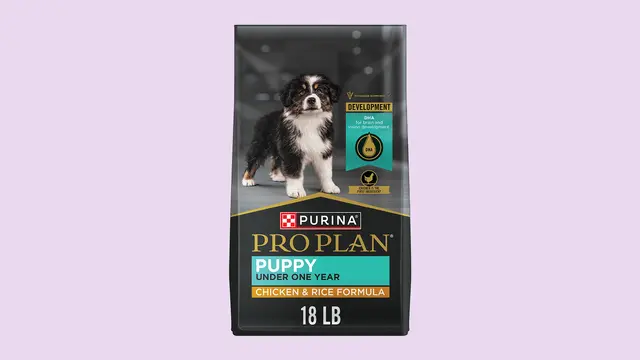
Purina Pro Plan Puppy Chicken & Rice
About $2.00 to $2.50/lb
29 percent of the work is done before you read the rest of the card: chicken leads, protein runs 28 percent minimum, and the AAFCO statement comes from a feeding trial, not just formulation. It covers all life stages including large-breed growth, so it fits a beagle and a boxer puppy alike, and it lists DHA at 0.1 percent. The one catch is that one bag has to serve every size, so a giant-breed owner may still want a size-specific formula your vet signs off on.
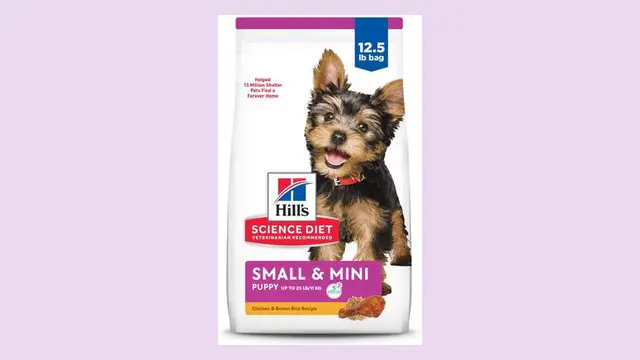
Hill's Science Diet Puppy Small & Mini Chicken
About $3.20 to $3.80/lb
418 kcal per cup is a lot of energy in a small scoop, which is the point for a toy or small puppy that burns fast and has a tiny stomach to fill. Chicken leads, protein is high at 28.9 percent, and the growth claim is backed by a feeding trial. The kibble is sized for little mouths. It costs more per pound than the bigger-bag picks, so it earns its place by fit rather than value, and a large-breed puppy should skip it entirely.
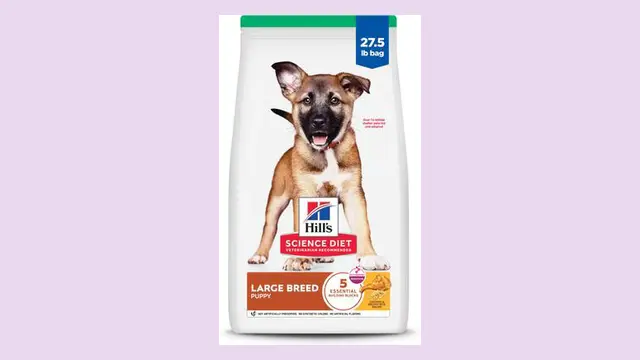
Hill's Science Diet Puppy Large Breed Chicken & Brown Rice
About $2.40 to $2.90/lb
1.16 percent calcium is the number that matters here, comfortably under the 1.8 percent ceiling that protects big growing joints. It is built for dogs expected to top about 55 pounds, runs 26.3 percent protein and 391 kcal per cup, and lists DHA at 0.083 percent. The growth claim is feeding-trial backed. Note the label reads complete for growing puppies generally rather than spelling out the 70-pound large-size wording, so for a giant breed, ask your vet to confirm it fits.
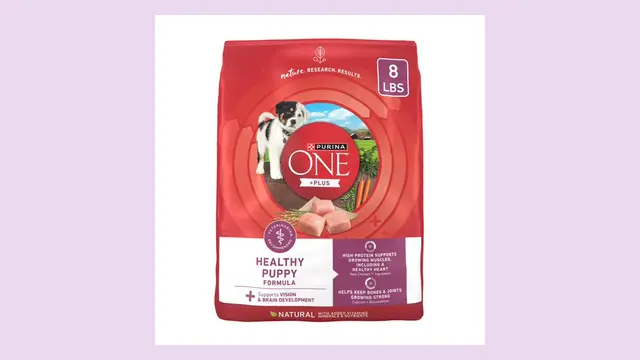
Purina ONE +Plus Healthy Puppy Chicken
About $1.50 to $1.90/lb
Real chicken leads, protein hits 28 percent minimum, and DHA is on the panel at 0.05 percent, all for roughly half the per-pound cost of the small-breed pick. It is the easiest food here to keep buying through a puppy's hungriest months. The DHA level is lower than the premium picks and the recipe is less specialized, which is a fair trade if your puppy digests it well and holds a healthy body condition.
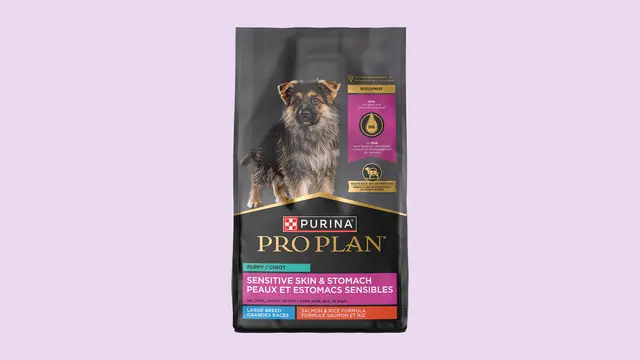
Purina Pro Plan Puppy Sensitive Skin & Stomach Salmon & Rice
About $2.40 to $2.90/lb
Salmon leads and rice carries the carbs, with no corn, wheat, or soy to give a touchy gut fewer common triggers. Protein is 28 percent, fat is a leaner 13 percent, and it lists both EPA and DHA at 0.1 percent for skin and brain. The AAFCO growth claim, including large-breed growth, comes from formulation rather than a feeding trial. A loose stool is not a diagnosed food allergy, so if your puppy has real GI trouble, let your vet pick the protein.
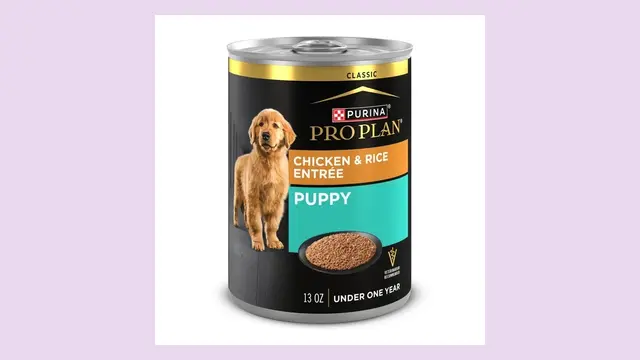
Purina Pro Plan Puppy Chicken & Rice Pate
About $5.50 to $7.00/lb
76 percent moisture is the whole reason to reach for a can: it helps hydration and tempts a picky eater or a teething puppy that turns its nose up at kibble. Chicken leads, the pate is complete and balanced for growth, and protein reads 10 percent on the as-fed panel, which looks low only because most of the can is water. It costs far more per usable calorie than dry, so many owners use it as a topper rather than the whole meal.
Compare them side by side
All six picks gathered into one table, kept in the same order as the cards, so the numbers line up for a quick read. The protein spread is narrow, 26.3 to 28.9 percent across the dry foods, because growing puppies all need a lot of it. The real spread is in price and fit: roughly $1.50 a pound for the budget bag up past $5 a pound for the wet pate, which is a difference in form and convenience, not a quality ranking.
| Food | Best for | Protein (min) | DHA / calcium note | Approx $/lb |
|---|---|---|---|---|
| Purina Pro Plan Puppy Chicken & Rice | Overall | 28% | DHA 0.1%, large-breed cleared | $2.00–$2.50 |
| Hill's Science Diet Puppy Small & Mini | Small breeds | 28.9% | 418 kcal/cup | $3.20–$3.80 |
| Hill's Science Diet Puppy Large Breed | Large breeds | 26.3% | Calcium 1.16%, DHA 0.083% | $2.40–$2.90 |
| Purina ONE +Plus Healthy Puppy | Budget | 28% | DHA 0.05% | $1.50–$1.90 |
| Pro Plan Puppy Sensitive Skin & Stomach Salmon | Sensitive stomachs | 28% | EPA/DHA 0.1%, large-breed cleared | $2.40–$2.90 |
| Pro Plan Puppy Chicken & Rice Pate | Wet food | 10% (as fed) | 76% moisture | $5.50–$7.00 |
Feeding amounts and timing
3 to 4 meals a day is the usual start for a young puppy, dropping to 2 meals by around six months as the stomach grows and the metabolism settles (AKC). Begin with the feeding chart on the bag, which sets amounts by your puppy's age and expected adult weight, then adjust to keep ribs you can feel but not see. Puppy formulas pack more calories than adult food on purpose, so a heavy hand adds weight fast, and in a big-breed puppy extra weight is exactly the load you are trying to keep off growing joints.
When you change foods, including moving onto any pick here, take 7 to 10 days. Start around a quarter new food, reach half and half by mid-week, and finish on all new by the end, stretching the window if stools turn soft (AKC). Most small and medium dogs move from puppy food to an adult formula near 12 months. Large and giant breeds keep building bone for 18 to 24 months, so they stay on large-breed puppy food longer (AKC). When that switch happens for a big dog is a question for your vet, not the calendar.
Matching food to your puppy
Best overall puppy: Purina Pro Plan Puppy Chicken & Rice, 28 percent protein, feeding-trial backed, and cleared for large-breed growth. Best small breed: Hill's Science Diet Puppy Small & Mini, dense at 418 kcal per cup with little-mouth kibble. Best large breed: Hill's Science Diet Puppy Large Breed, calcium held to 1.16 percent for controlled bone growth. Best budget: Purina ONE +Plus Healthy Puppy, chicken-led and complete for growth at roughly $1.50 to $1.90 a pound. Best sensitive stomach: Pro Plan Puppy Sensitive Skin & Stomach Salmon, salmon-led with no corn, wheat, or soy. Best wet: Pro Plan Puppy Chicken & Rice Pate, 76 percent moisture for hydration and picky eaters. Match the breed-size statement to your puppy first, then let your vet confirm the call for any health concern.
Puppy feeding questions answered
It comes down to calcium and growth speed. A big puppy grows fast and stays in the growth window for 18 to 24 months, and too much calcium during that stretch can drive developmental orthopedic disease in the joints (AAFCO, AKC). To protect against that, AAFCO holds foods that carry the large-breed growth claim to a calcium ceiling of 1.8 percent on a dry-matter basis (AAFCO). A large breed is defined as a dog expected to reach 70 pounds or more as an adult. So if your puppy is headed past that, look for a label that says it covers growth of large size dogs, not just a generic growth claim.
DHA is an omega-3 fatty acid, usually from fish oil or fish meal, that is tied to brain and vision development in the first year of life (AKC). It is found in mother's milk, which is why many puppy formulas add it. It is a helpful nutrient to see on the guaranteed analysis, and the picks here list it from about 0.05 percent up to 0.1 percent. It is not the single thing that makes or breaks a food, though. A complete-and-balanced growth statement matters more, and DHA is a reasonable tiebreaker between two foods that both carry one.
Find the small-print nutritional adequacy statement, usually on the back or side. On a puppy bag it has to read complete and balanced for growth, or for all life stages (AAFCO), and it shows the proof method too: a feeding trial run under AAFCO procedures, or formulation to meet the AAFCO Dog Food Nutrient Profiles. For any dog headed past 70 pounds, the statement needs to add growth of large size dogs. WSAVA points owners to this statement and the maker's nutrition expertise rather than the ingredient list, which it considers a weak and often misleading quality signal (WSAVA).
Young puppies do best on three to four small meals a day, dropping to two meals around six months as the stomach grows and the metabolism settles (AKC). Start with the feeding chart on the bag, which is set by age and expected adult weight, then adjust so you can feel the ribs without seeing them. Puppy food is calorie-dense by design, so overfeeding adds weight quickly, and in a large-breed puppy that extra weight is load on joints that are still forming. If your puppy is gaining or losing too fast, have your vet set a target.
Most small and medium dogs are ready near 12 months, around the time they reach adult size. Large and giant breeds keep building bone for 18 to 24 months, so they stay on large-breed puppy food longer to match that slower timeline (AKC). Puppy food carries more calories and nutrients for growth, so leaving a dog on it past maturity tends to add weight. Make the change a gradual 7 to 10 day transition like any food switch. Because big-breed timing varies, confirm the right moment with your vet rather than going by age alone.