


The best dog food in 2026 is the one that is complete and balanced for your dog's life stage and that your dog actually thrives on. That sounds anticlimactic, but it is the part most bag-front marketing skips. "Complete" means a food supplies every nutrient a dog needs, and "balanced" means it supplies them in the right proportions (AAFCO). A $60 bag with a beautiful label and no nutritional adequacy statement is doing less for your dog than a plainer bag that carries one.
5 minutes with the back of the bag tells you more than 5 ads. Find the AAFCO nutritional adequacy statement: it will say the food is complete and balanced for growth (puppies), adult maintenance, or all life stages, and whether that was confirmed by formulation to meet the AAFCO Dog Food Nutrient Profiles or by an actual feeding trial (AAFCO). Match the life stage to your dog, read the guaranteed analysis for minimum protein and fat, and you have done the hard 80 percent. The six foods below all carry that statement; I sorted them by the job they do best.
At PawProof, two screens decide it, in this order. First, the food must carry an AAFCO nutritional adequacy statement for the right life stage, complete and balanced, by formulation or feeding trial (AAFCO). Second, it should pass the WSAVA questions: is the maker employing a qualified nutritionist, running quality control, and able to share nutrient and calorie data when asked? WSAVA does not endorse brands, it gives owners those questions to ask (WSAVA). Every pick here meets both screens. Treat all of it as a shortlist, not a substitute for the vet who has actually examined your dog.
Our picks for 2026
6 foods, 6 jobs. Each card pulls three real numbers straight off the current label or manufacturer page, so you can hold them up against the bag in front of you. Protein and fat figures are guaranteed-analysis minimums; calories are kcal per cup where the maker publishes them. The prices are rough per-pound large-bag US retail from mid-2026 and they drift, so treat them as a ballpark and check the shelf.
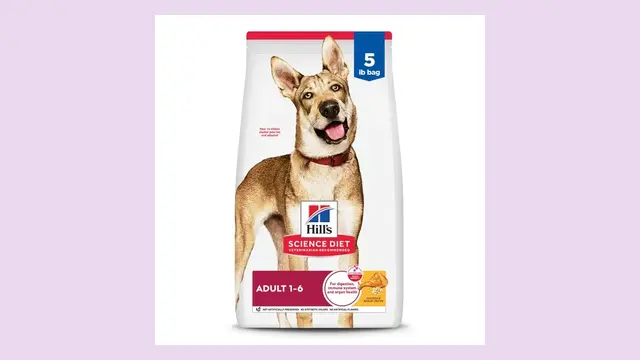
Hill's Science Diet Adult Chicken & Barley
About $2.50 to $3.00/lb
A dull-looking bag that does the boring things right, which is exactly what you want in an everyday adult food. Chicken leads the recipe, the adult-maintenance claim is backed by an AAFCO feeding trial rather than formulation alone, and Hill's publishes full nutrient and calorie data, which clears the WSAVA questions. It is built for adult dogs roughly 1 to 6 years old, so reach for a different life stage if you have a puppy or a senior.
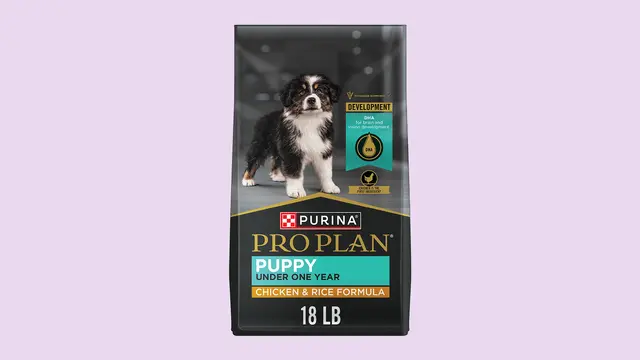
Purina Pro Plan Puppy Chicken & Rice
About $2.00 to $2.50/lb
At 28 percent minimum protein this is the highest-protein food on this list, which suits the muscle and tissue a growing dog is building. The AAFCO statement comes from a feeding trial and covers growth, including large-breed growth (dogs 70 lb or more as adults), so it works for a Lab puppy as well as a beagle. It adds DHA for brain and vision development. A large-breed puppy still needs its calcium watched, so confirm portion size with your vet to keep growth steady.
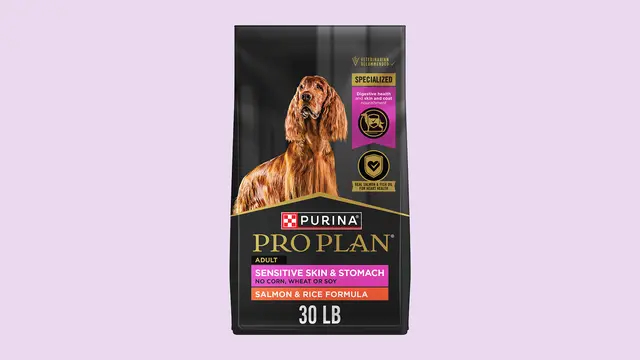
Purina Pro Plan Sensitive Skin & Stomach Salmon & Rice
About $2.30 to $2.80/lb
Salmon leads, rice and oatmeal carry the carbohydrates, and there is no corn, wheat, or soy, which gives a fussy gut fewer common triggers to react to. The omega-rich fish oil is a bonus for itchy skin and coat. The adult-maintenance claim is backed by an AAFCO feeding trial. A sensitive stomach is not the same thing as a diagnosed food allergy, so if your dog has real GI disease or suspected allergies, let your veterinarian steer the protein choice rather than guessing.
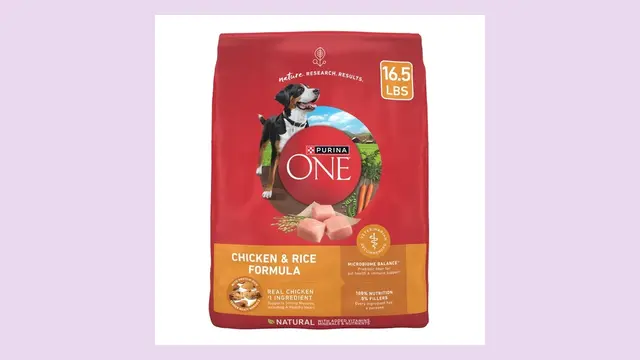
Purina ONE Chicken & Rice Formula
About $1.60 to $2.00/lb
Proof that a complete-and-balanced bag does not have to cost a premium. Chicken is the first ingredient, it carries an all-life-stages AAFCO statement, and it runs about 383 kcal per cup, so a little goes a reasonable distance. At roughly half the per-pound cost of the overall pick, it is the easiest food here to keep buying month after month. The trade-off versus the pricier picks is a less specialized recipe, which is a fair deal if your dog does well on it.
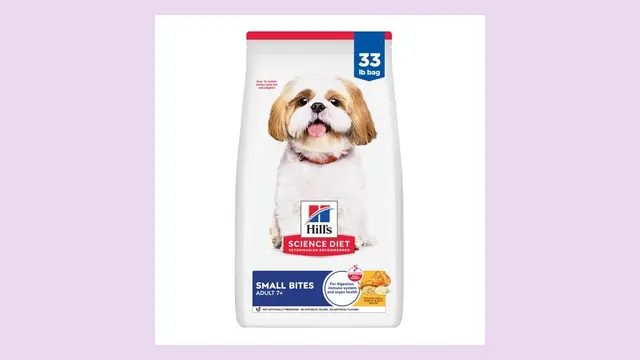
Hill's Science Diet Adult 7+ Chicken Meal, Barley & Rice
About $2.60 to $3.10/lb
Built for dogs 7 and older, with protein around 18.7 percent and fat near 13.5 percent, a leaner profile that helps a slowing dog hold a healthy weight. The adult-maintenance claim is backed by an AAFCO feeding trial, and the recipe leans on easy-to-digest ingredients. "Senior" is an age band, not a diagnosis, so if your older dog has kidney, heart, or other concerns, ask your veterinarian whether a therapeutic diet is the better call before you switch on age alone.
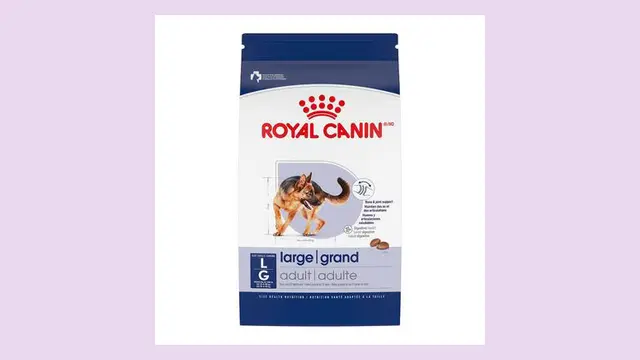
Royal Canin Large Adult
About $2.30 to $2.80/lb
Aimed at adult dogs over about 56 lb, with 24 percent minimum protein, a larger kibble that encourages chewing, and roughly 360 kcal per cup to manage the calories a big frame needs. Chicken by-product meal leads, which is a concentrated protein source even if it reads less prettily than "deboned chicken." Its AAFCO maintenance claim is met by formulation to the nutrient profiles rather than a feeding trial, so it is an adult food, not a large-breed puppy food. Use the puppy pick while a big dog is still growing.
Compare the six at a glance
The same six picks, this time stacked in one table so protein and price sit next to each other, in the same order as the cards. Notice the spread: 18.7 to 28 percent protein and roughly $1.60 to $3.10 per pound across the set, which is the difference between a senior maintenance food and a high-protein puppy food, not a quality ranking.
| Food | Best for | Protein (min) | First ingredient | Approx $/lb |
|---|---|---|---|---|
| Hill's Science Diet Adult Chicken & Barley | Overall | 23.8% | Chicken | $2.50–$3.00 |
| Purina Pro Plan Puppy Chicken & Rice | Puppies | 28% | Chicken | $2.00–$2.50 |
| Purina Pro Plan Sensitive Skin & Stomach Salmon & Rice | Sensitive stomachs | 26% | Salmon | $2.30–$2.80 |
| Purina ONE Chicken & Rice Formula | Budget | 26% | Chicken | $1.60–$2.00 |
| Hill's Science Diet Adult 7+ Chicken Meal, Barley & Rice | Seniors | 18.7% | Chicken meal | $2.60–$3.10 |
| Royal Canin Large Adult | Large breeds | 24% | Chicken by-product meal | $2.30–$2.80 |
How to switch food without an upset stomach
7 to 10 days. That is the window to move a dog onto any new food, including these. A sudden swap is the fastest route to loose stools, so mix the foods and shift the ratio gradually. The AKC lays out a simple version: roughly 25 percent new on day 1, half and half by day 3, about 75 percent new by day 5, and all new by day 7, stretching the timeline if your dog needs it (AKC). The AAHA frames it the same way, starting around a quarter new food and increasing as your dog accepts it (AAHA).
Watch the back end of the dog as much as the bowl. If you see soft stools, gas, or a skipped meal, hold the current ratio for a day or two instead of pushing ahead, and dogs with known sensitive stomachs or GI conditions often need the full 10 days or longer (AAHA). If symptoms are more than mild or last beyond a couple of days, call your veterinarian rather than waiting it out.
The pick for each kind of dog
Best overall: Hill's Science Diet Adult Chicken & Barley, a feeding-trial-backed adult maintenance food at 23.8 percent protein with chicken first. Best for puppies: Purina Pro Plan Puppy Chicken & Rice, the highest-protein pick here at 28 percent and cleared for large-breed growth. Best for sensitive stomachs: Purina Pro Plan Sensitive Skin & Stomach Salmon & Rice, salmon-led with no corn, wheat, or soy. Best on a budget: Purina ONE Chicken & Rice, complete and balanced for all life stages at roughly $1.60 to $2.00 per pound. Best for seniors: Hill's Science Diet Adult 7+, a leaner maintenance profile around 18.7 percent protein for dogs 7 and up. Best for large breeds: Royal Canin Large Adult, 24 percent protein with bigger kibble and about 360 kcal per cup. Match the life stage to your dog first, then confirm the choice with your veterinarian for any health condition.
What owners ask about food
As of 2026, there is no proven causal link between grain-free diets and dilated cardiomyopathy (DCM) in dogs. The FDA investigated reports from 2014 to 2022 and ended its public updates in December 2022, saying the data did not establish a causal relationship and that it would not post more until there was meaningful new science. The FDA has not said grain-free foods are unsafe or that they should be pulled from the market (FDA, AVMA). The practical takeaway: a grain-free food is not automatically risky, and it is not automatically better either. Choose based on a complete-and-balanced AAFCO statement and your dog's needs, and if heart health is a concern for your individual dog, ask your veterinarian.
Find the AAFCO nutritional adequacy statement, usually in small print on the back or side. It spells out which life stage the food is built for, growth, adult maintenance, or all life stages, and how that was proven, either by formulation to meet the AAFCO Dog Food Nutrient Profiles or by a feeding trial (AAFCO). Then read the guaranteed analysis for minimum crude protein and fat, and check kcal per cup if you are watching weight. The first ingredient tells you the largest component by weight, but the ingredient list alone is a weak quality signal, which is why WSAVA points owners to the nutritional statement and the maker's expertise instead (WSAVA).
Start with the feeding chart on the bag, which sets amounts by your dog's weight, then adjust to keep a healthy body condition. Calories matter more than cups, because foods differ: the budget pick here runs about 383 kcal per cup and the large-breed pick about 360, so the same scoop is not the same energy. The right amount depends on age, neuter status, and activity, and most adult dogs need less than the bag's high end. If your dog is gaining or losing, change the portion gradually and have your veterinarian confirm a target weight and daily calorie goal.
Neither is better by default; both can be complete and balanced if the label carries the AAFCO statement for your dog's life stage (AAFCO). Dry food costs less per calorie, is easy to portion, and stores well. Wet food has more moisture and is often more palatable, which helps picky eaters, dogs that need extra water, or seniors with dental issues. Plenty of owners mix the two. Pick based on cost, your dog's preference, and any vet guidance, and keep an eye on calories either way, since wet food's water content can make portions deceptive.
Most dogs move to an adult formula when they reach roughly their adult size, which is around 12 months for small and medium breeds and closer to 18 to 24 months for large and giant breeds that grow longer. Puppy or growth food carries more calories and nutrients for building tissue, so staying on it past maturity can lead to excess weight. Make the change as a gradual 7 to 10 day transition like any other food switch (AKC). Because large-breed growth timing varies, confirm the right moment with your veterinarian rather than going by the calendar alone.